

sec@brattonhistory.co.uk
|
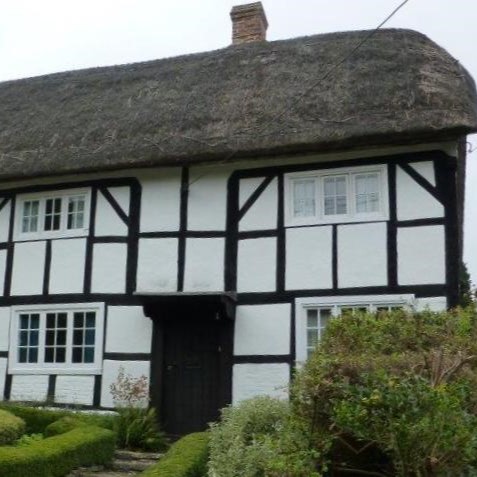
Court Lane FarmhouseCourt Lane Farm was built as a 2-bay half-timbered cottage in the mid-17th century. In 1669 it was purchased by the Longleat Estate and leased, with its curtilage. This garden area has been tilled for many centuries and frequently reveals pottery shards dating from medieval to early 20th century. The house was extended to the south in the late 18th century at which time the roof was raised. An extension to the west was added in about 1830. The latter covered the well which was outside the original back door. The house was rented by various village families. In the 19th century the tenants ran it as a beer house, following the Beer House Act of 1830. The home brewery was in the extension to the west and sales were made in the room to the right of the front door. A cold cellar and a Victorian privy in the garden are from the same time. Finds in the garden include numerous pieces of long clay pipes. Inside are several features typical of a building in 17th century and its occupation since. Some of the biggest beams have been used in earlier buildings and include mortices and tenons of their previous use. Some have adze marks from their original forming. The beam over the inglenook still has remnants of a hessian smoke screen and marks the place where hot pokers were tested before mulling ale. There is a corner for the old man’s chair and a hole to take the rod designed to prevent children accidentally falling into the fire. In 1920 Henry Mead, then the tenant farmer, purchased the freehold from the Longleat Estate. He was succeeded by his third son Tom who farmed here until 1974. His older brothers, Walter and Harold, had been killed in World War I. Harold’s initials are carved into a brick at the back of the house. Historic England listing [Return] |
Bratton History Association.
The Bratton History Association aims to provide all those curious about local history with an opportunity to meet, exchange ideas,
and discover more about the history of Bratton and Wiltshire. Activities include monthly meetings, talks by professional historians,
visits to places of interest to historians, and our own local history project.
Copyright Bratton History Association 2015-2026
Bratton History Association Privacy Statement
Copyright Bratton History Association 2015-2026
Bratton History Association Privacy Statement
Web Design by Blue Engine Web Development © 2008-2026