|
St James' Church - Church Road
Summary Historical Guide to the Parish Church of St James in Bratton
This is a summary of the Historical Guide to the Parish Church of St James in Bratton, Wiltshire. The full Guide (40 pages with illustrations) details its architecture, history, and archaeological significance. It is available to buy in the church, at a cost of £2.
Historical Context of St James’ Church
- The church of St James has a rich historical background, reflecting its evolution and significance in the Bratton community.
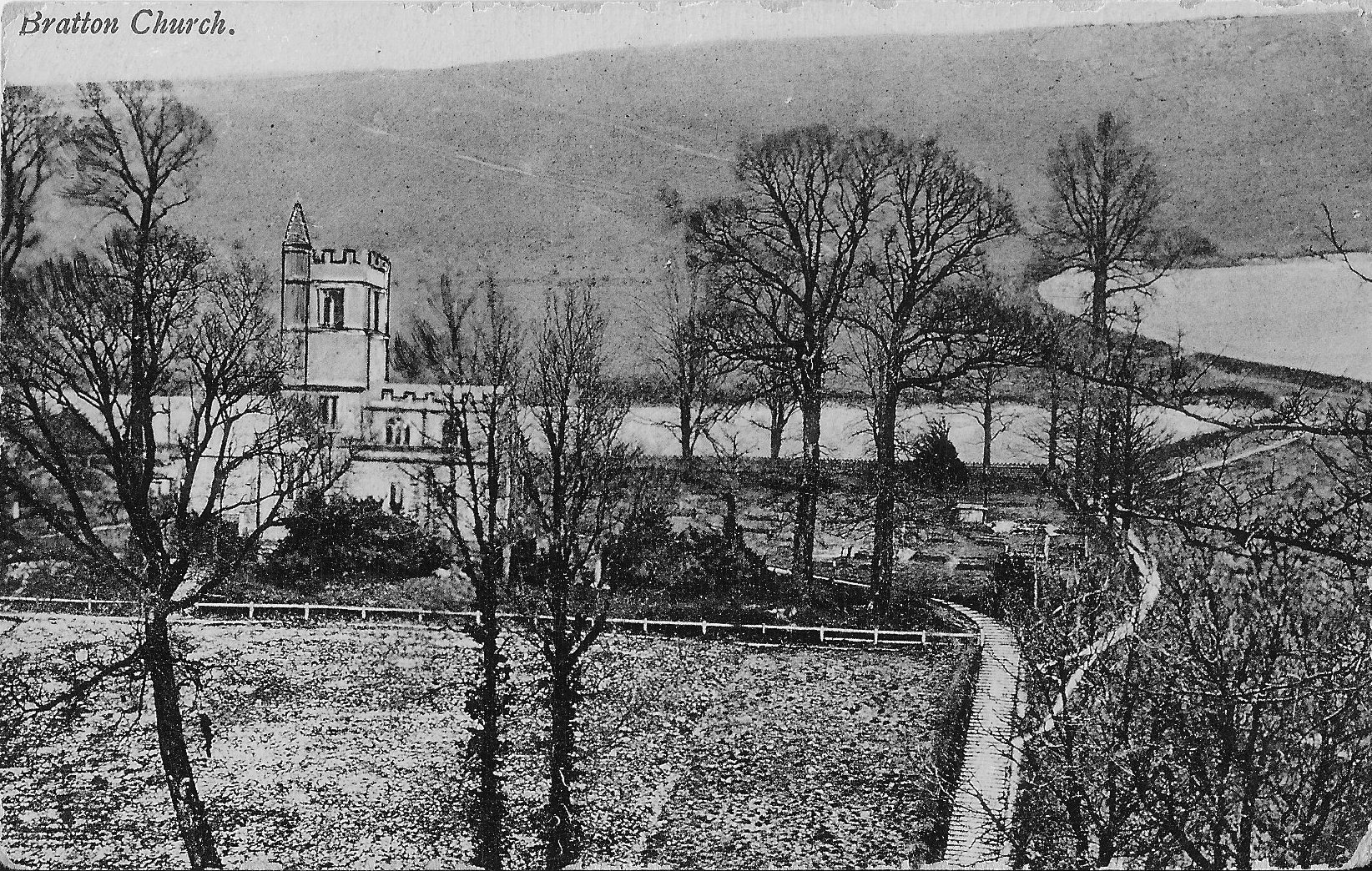
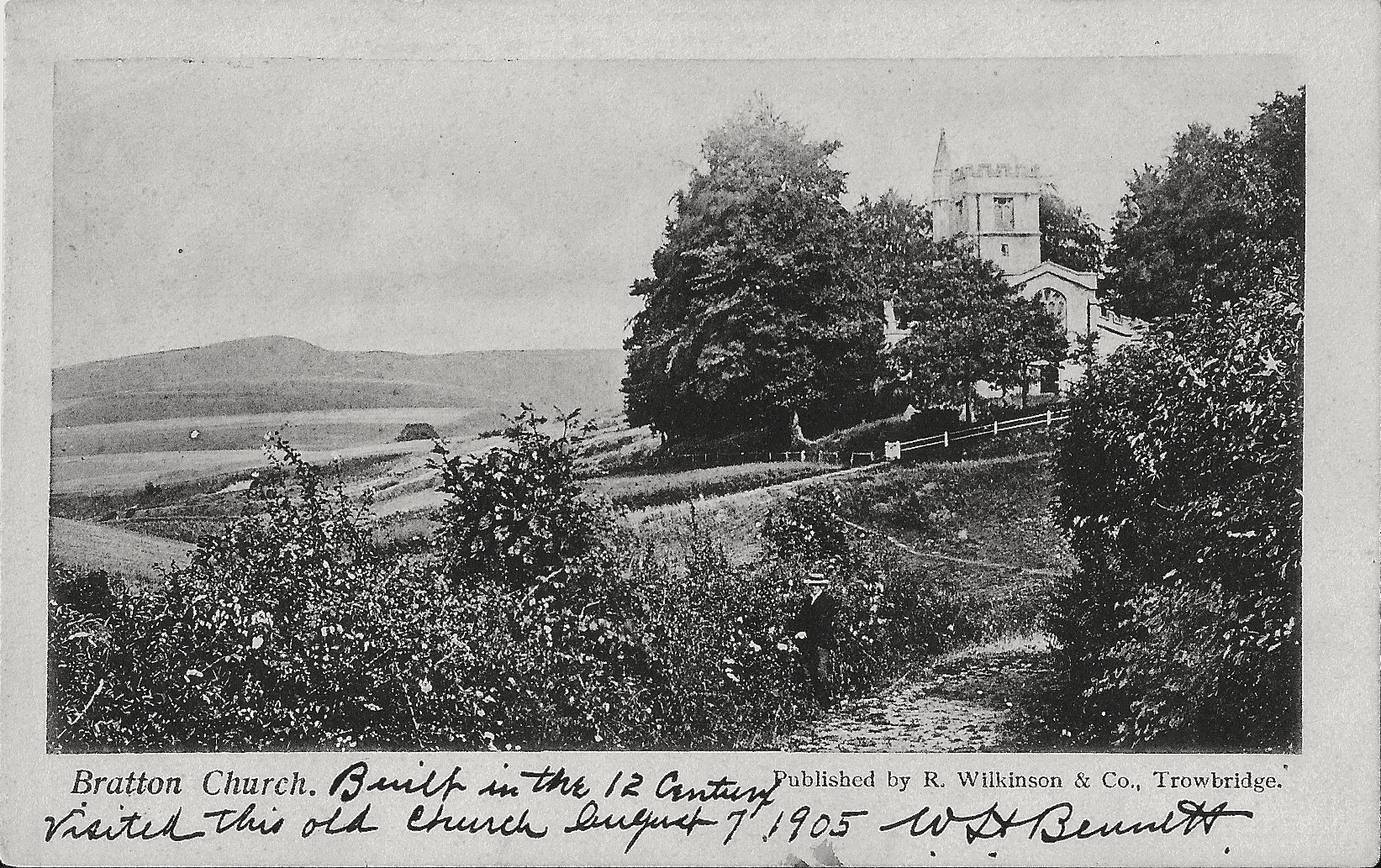
- Located on the northern edge of Salisbury Plain, the church was historically known as the church of Littlestoke, a hamlet with connections to Westbury. It may have been built on the site of a Saxon chapel.
- Archaeological evidence indicates human habitation dating back to the Neolithic and Bronze Age, with Roman and medieval artifacts found nearby.
- Bratton was formed by the amalgamation of three Saxon hamlets: Little Stoc (Littlestoke), Milbourne/Stradbrook, and Braectun.
- The church has been the parish church of Bratton since its inception, with references to its existence in medieval documents.
- Littlestoke finally disappeared over 350 years ago, probably due to the enclosure system and possibly also due to the plague (Black Death).
Architectural Features of St James’ Church
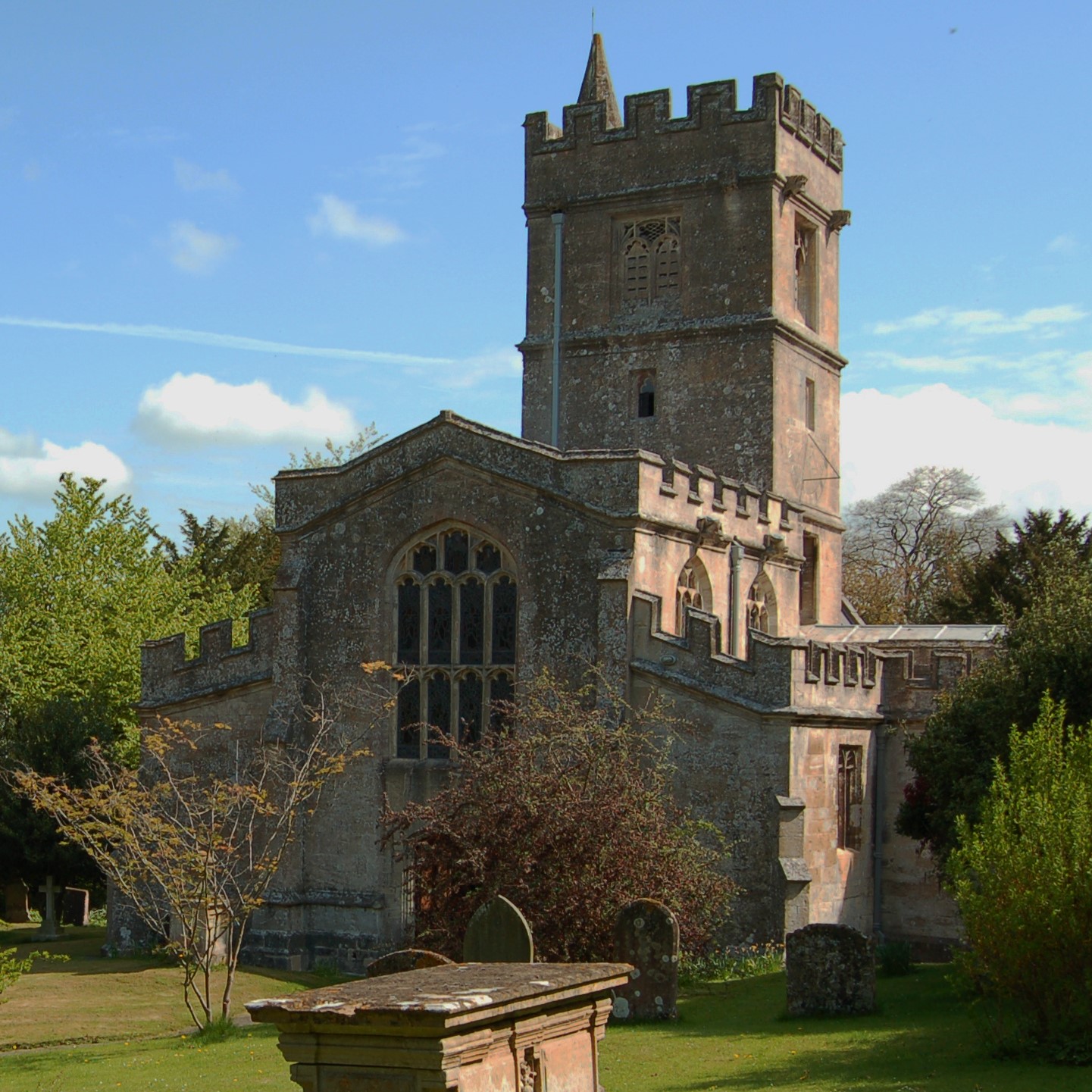
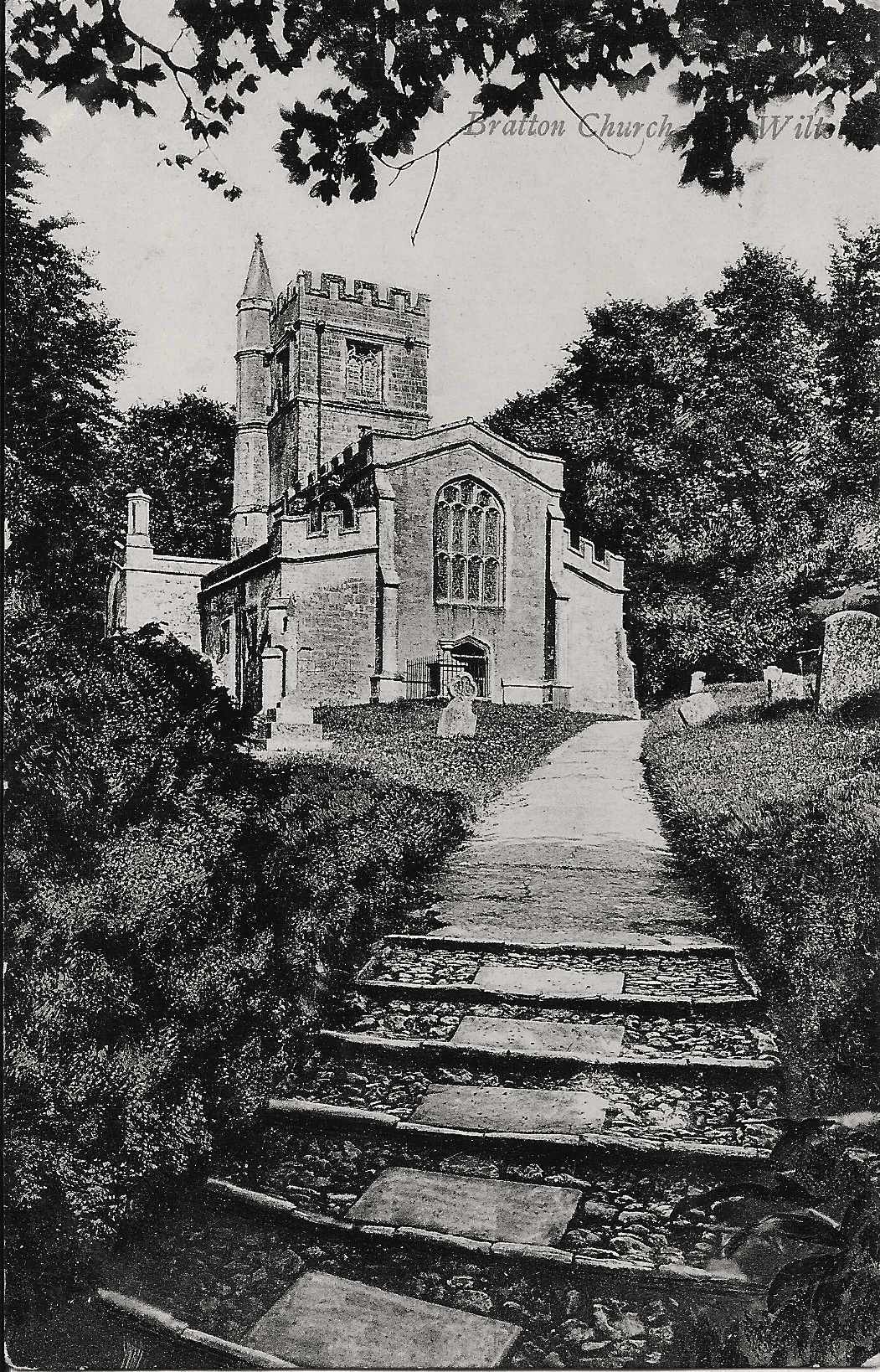
- St James’ Church is a prime example of a cruciform village church, showcasing various architectural styles and historical modifications.
- The church has a Norman tower foundation. It primarily exhibits Perpendicular style architecture from around AD 1400, when it was substantially rebuilt.
- Key features include a central tower, chancel, transepts, nave, and aisles, with a mix of ashlar and rubble construction.
- The chancel was rebuilt in 1854 in the Early English style, while the nave and aisles date mainly from the 15th century.
- The vestry was built in 1925.
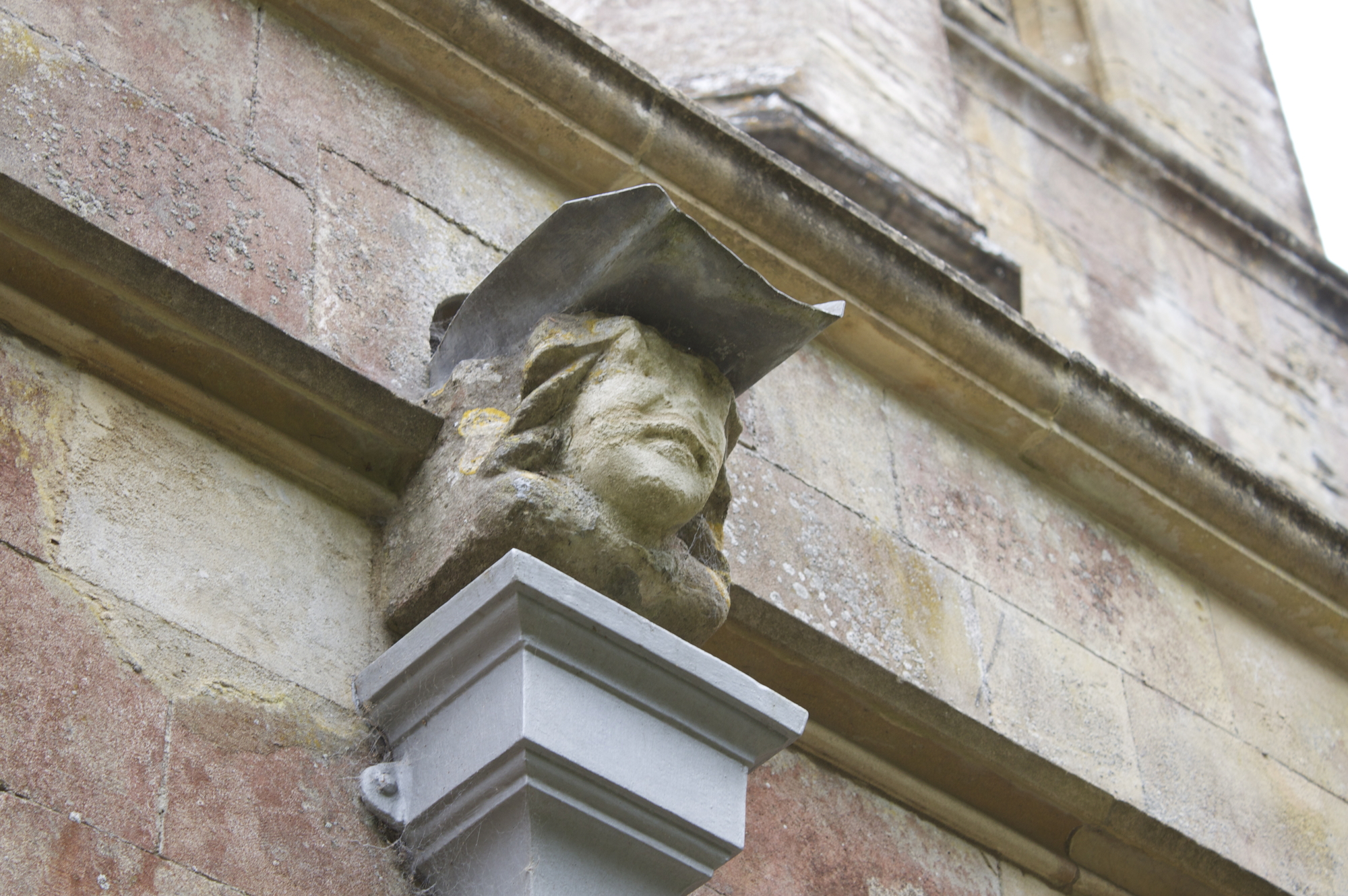
- Notable elements include 15th-century gargoyles, a painted sundial from 1801, and various stained glass windows that have been replaced or restored over time.
Dedication and Historical Significance
- The church is dedicated to St James the Great, with historical debates regarding its earlier dedication to St Margaret.
- St James' festival is celebrated on July 25, while St Margaret's falls on July 20, suggesting a possible earlier dedication.
- Local records indicate a revel held near St Margaret's feast day, hinting at the church's historical significance in community celebrations.
- The earliest documents refer to the church as the church of Littlestoke, with no definitive evidence of its dedication.
Evolution of the Church's Status
- The church's status has evolved from a chapel to an independent parish, reflecting the community's persistent efforts for recognition.
- The church was involved in legal disputes regarding its status as a separate parish versus a chapel of ease for Westbury.
- In 1845, Bratton was granted independence as a parish, although it initially faced challenges such as lack of funds and a vicarage.
- The Revd Charles Palairet (1804-1890) played a crucial role in restoring the church in the 1850’s, and improving the village's infrastructure.
The Chancel's Reconstruction and Features
- The chancel underwent significant reconstruction in 1854, reflecting both historical preservation and modern needs.
- The chancel was rebuilt under the direction of architect Sir George Gilbert Scott, maintaining the original foundation line.
- The new chancel features Early English architecture, with a higher roof and new windows replacing older ones.
- Historical burials were sealed under a new floor, and the chancel now includes modern memorials and decorative elements.
Nave and Aisles Historical Overview
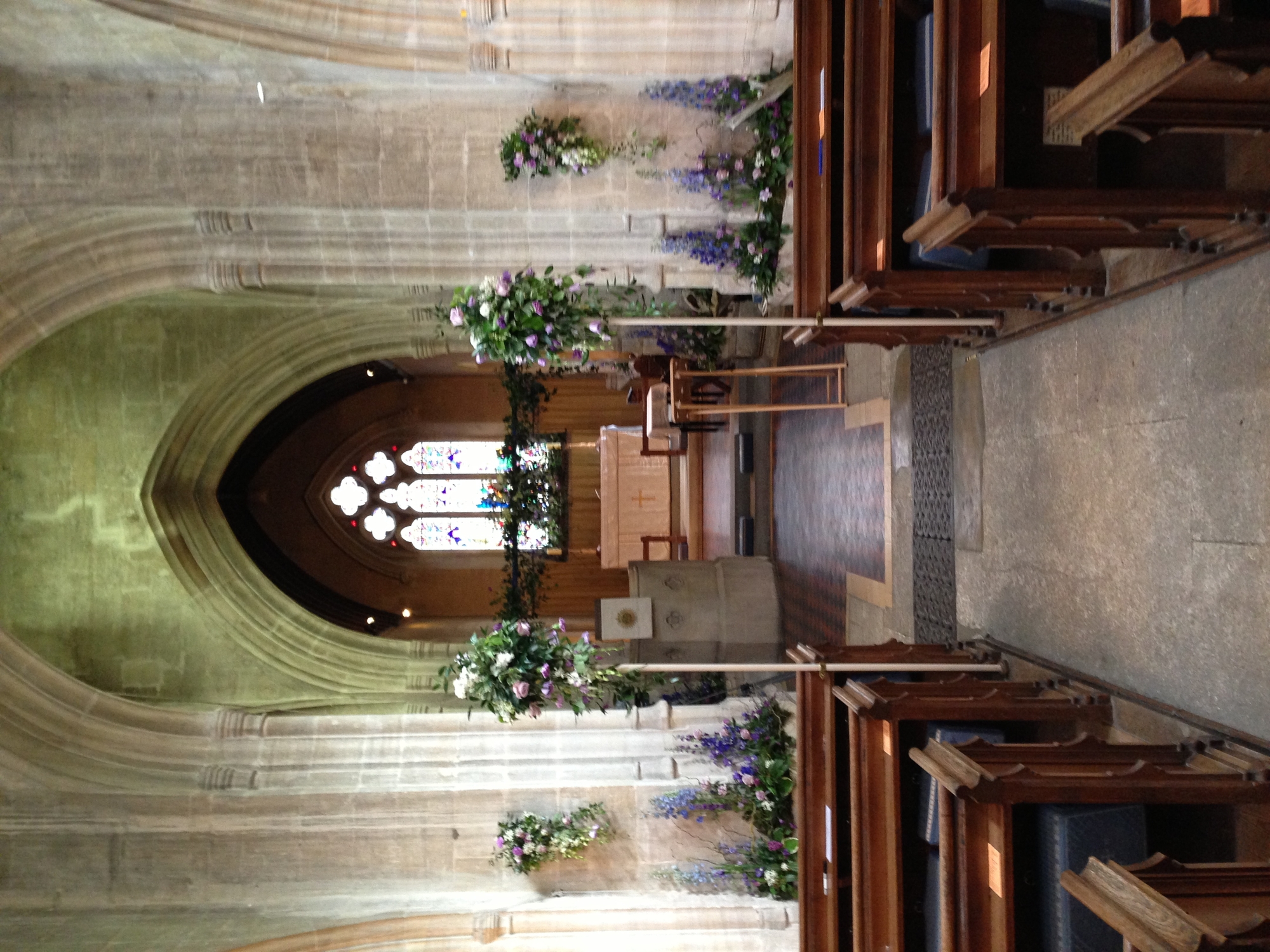
- The nave and aisles of St James’ Church reflect the church's architectural evolution and community memorialization.
- The nave and aisles primarily date from the 15th century, with clerestory windows added to enhance lighting.
- Memorials within the aisles commemorate local figures and families, including inscriptions dating back to the 17th century.
- The church has undergone various restorations, with stained glass windows and memorial plaques added over time to honour the community's history.
The Church Font and Its History
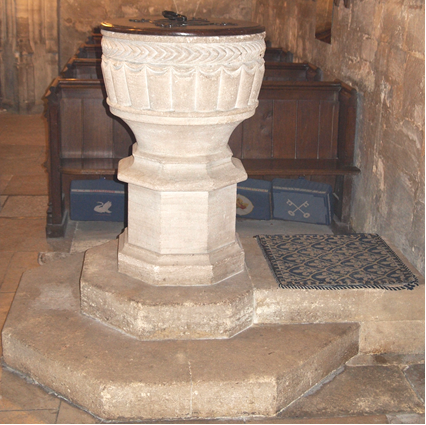
- The font in the church is a significant historical artifact that has undergone various modifications over the years.
- Originally a Norman-style basin set on a 15th-century base.
- Re-cut in 1860, reducing the thickness of the stone sides by nearly half.
The current cover dates from 1927.
- Medieval custom required the font to be made of durable material and locked to keep holy water pure.
- Locks were referred to as ‘witch locks’ to prevent misuse of holy water.
The North Transept Features
- The north transept contains historical elements that reflect the church's artistic and architectural heritage.
- It features four niches likely for saint images, now housing fabric hangings by Mrs. Lynn Noble.
- Contains 15th-century corbels depicting a lute player, a dancer, and angels.
- A small area of pre-1400 painted plaster remains on the east wall.
- Several memorials were lost during the 1860 restoration, including those of the Pepler family.
The South Transept and Organ
- The south transept is notable for its organ and architectural deviations from the north transept.
- The organ, built by Henry Willis around 1860, has been relocated multiple times.
- The east wall features a piscina, indicating a former altar, and a blocked hagioscope.
- Stained glass windows date from the 19th century, in memory of the Seagram family.
- Memorial tablets commemorate William and Elizabeth Whitaker, significant landowners in the area.
Church Repairs and Restorations
- The church has undergone numerous repairs and restorations, reflecting the community's commitment to its upkeep.
- Extensive repairs were needed by 1614, with ongoing maintenance documented through the centuries.
- Major restoration in 1860, costing £700, included renewing the roof and removing old wall paintings.
- The architect was Thomas Henry Wyatt, and the contractor was Mr. Barnden of Warminster.
- The church continues to receive funding for maintenance through St James’ Friends’ Fund and community efforts.
The Tower and Bells Overview
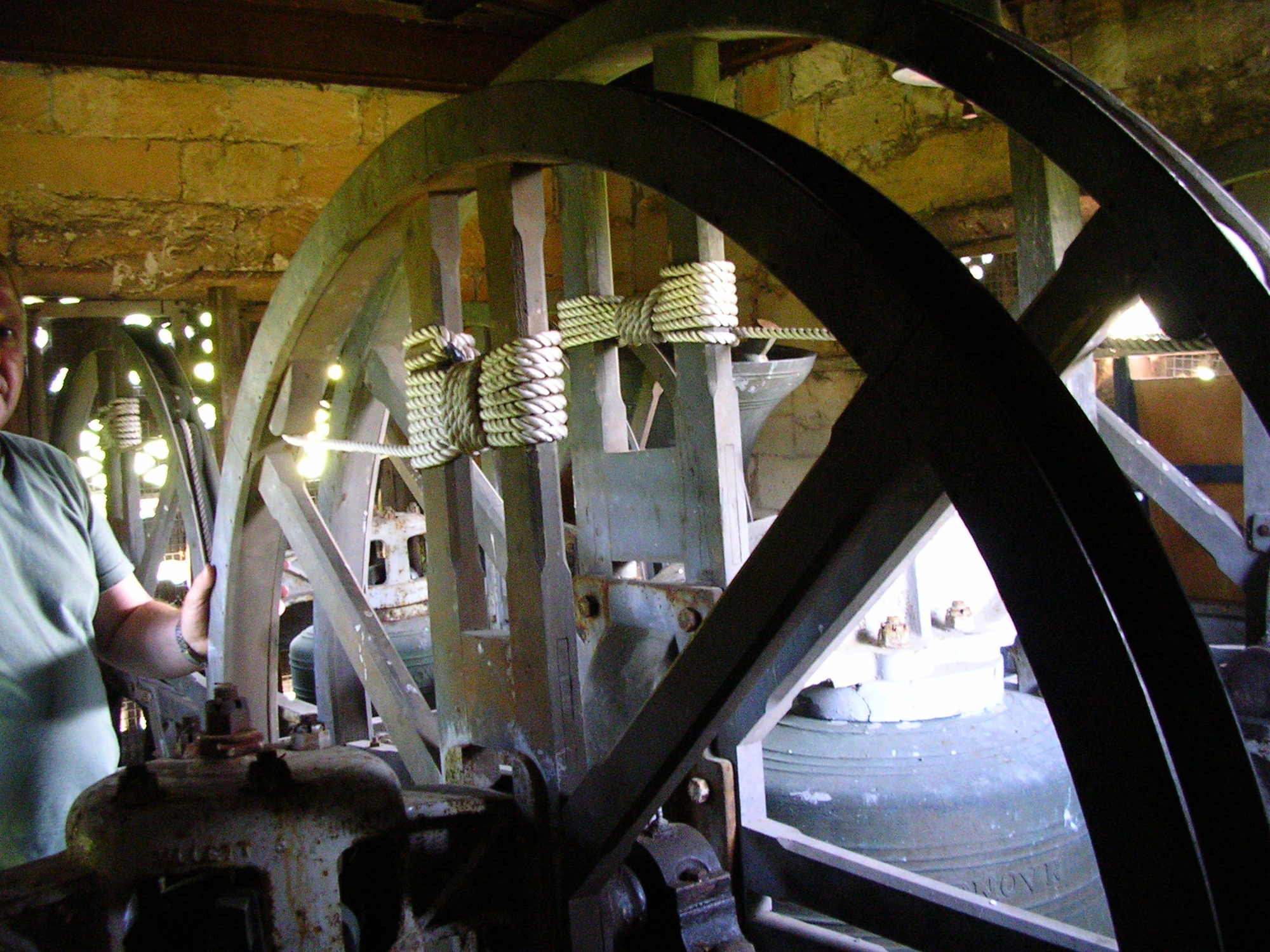
- The church tower features architectural elements from different periods and houses a peal of six bells.
- The tower is built on earlier pillar bases, likely from a Norman structure.
- The bells have a history of repairs and replacements, with records dating back to 1553.
- The oldest surviving bell is inscribed and dates back to 1587.
- The bells were removed, refurbished and rehung in 2021.
- Bell-ringers historically played a significant role in community events and announcements.
- The painted sundial on the south face is dated 1801.
The Church Porch Significance
- The porch serves as a historical and functional space within the church, reflecting medieval customs.
- It might have been built before the 15th century and has been much altered since then.
- Built against the south transept wall, it features a weather-worn niche and a scratch dial.
- The porch was historically important for marriage ceremonies and poor relief payments.
- It contains elements indicating its medieval origins, including a gable window and primitive heads.
Parish Registers and their Importance
- The parish registers are among the oldest in Wiltshire, providing valuable historical records.
- They were begun in 1542, with some entries lost due to neglect during the late 16th century.
- The registers document significant events, including outbreaks of plague and influenza.
- They are crucial for genealogical research, as they predate many other local records.
Church Plate and Valuables
- The church has a limited collection of valuable items, reflecting its historical context.
- It had a chalice in 1553, but its current whereabouts are unknown.
- A silver flagon was purchased in 1814, inscribed with churchwardens' names.
- Other silver items date from the 20th century, including a memorial alms dish.
The Churchyard's Historical Context
- The churchyard has evolved over time, reflecting changes in community practices and burial customs.
- Initially open to the elements, it was later enclosed with hedges and trees for protection.
- Vandalism and damage to the churchyard have been recorded since the 18th century.
- The churchyard has been expanded multiple times, with over 3,000 burials recorded since 1542.
- Since 1980 it has been carefully maintained by the Monday Gang, a team of volunteers.
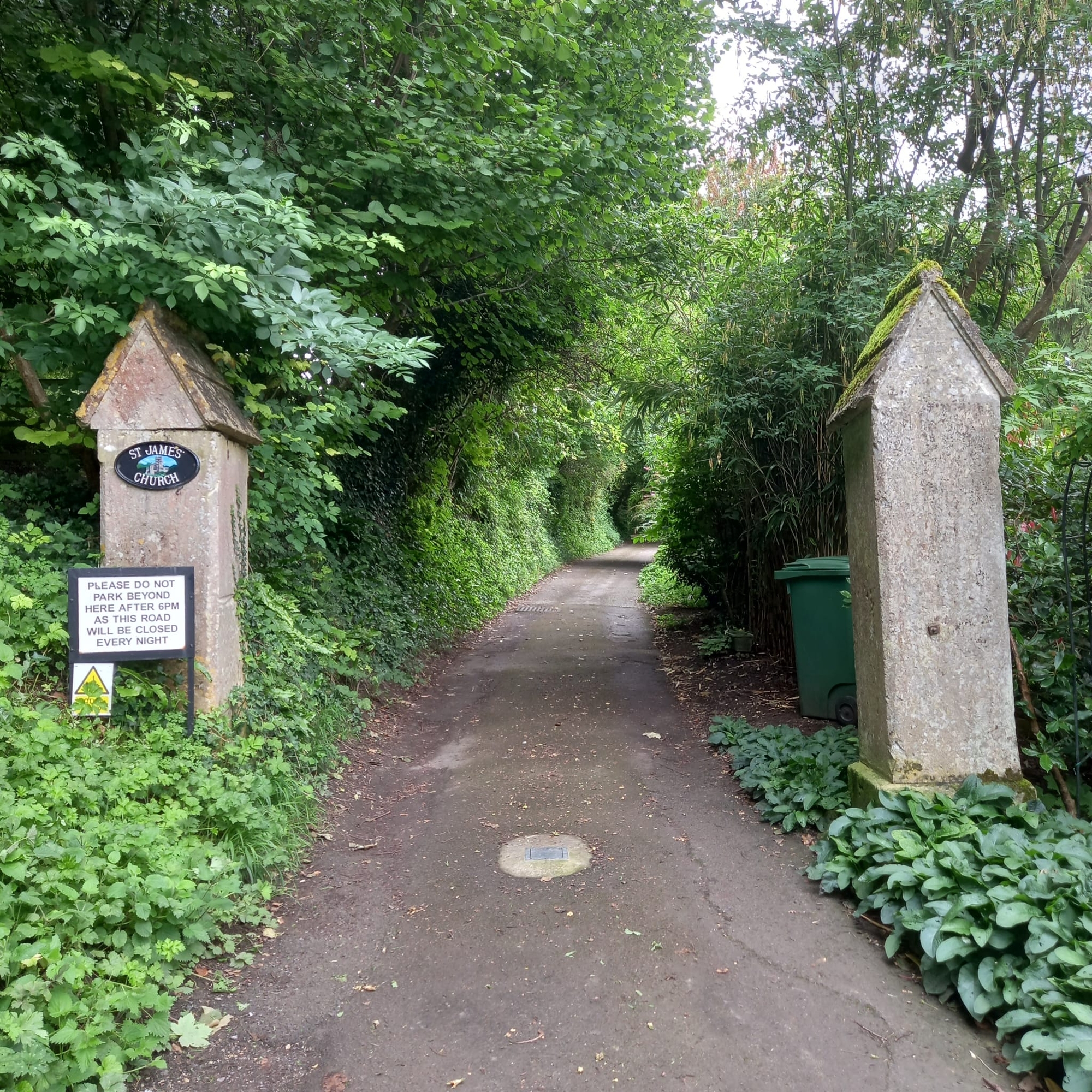
St James' Church gate posts.
Historic England listing
Historic England listing - Unidentified monument in the churchyard about 6 metres South West of South aisle of Church of St James
Historic England listing - Ballard and Aldridge monuments in the churchyard about 4 metres South of transept of Church of St James
Historic England listing - Four monuments in the churchyard between 4 and 12 metres South East of Church of St James
Historic England listing - Three monuments in the churchyard between 21 and 28 metres West of Church of St James
[Return]
|