

sec@brattonhistory.co.uk
|
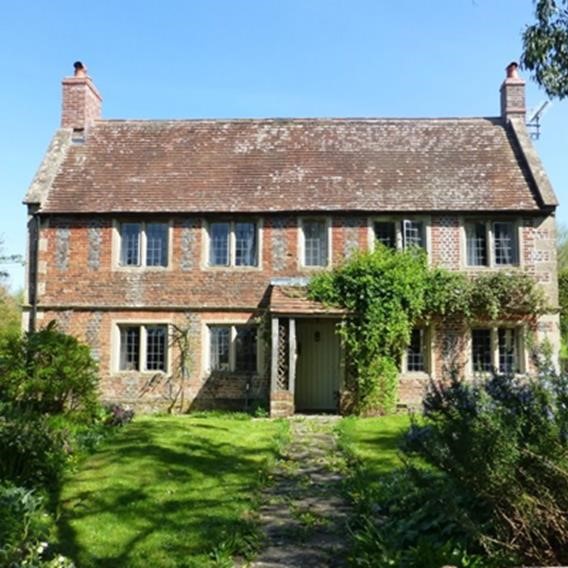
Winters - Lower RoadMany of Bratton’s best known houses were built or extended during the 18th century, expressing the aspirations and modest affluence of a class of yeoman famers and minor gentry who owned or had secure tenancies of land in the parish. Members of the Whitaker, Ballard, Blatch, Nevill and Brown families were among those who played a part in shaping the village scene through their building activities. In about 1690 William Ballard, a yeoman, was leasing Ballards Farm (now known as Grange Farm) from Sir Thomas Thynne , Viscount Weymouth. When William Ballard retired from farming, he built a house on a freehold close (i.e. enclosed piece of ground) at the east end of Lower Road – land that had passed through both Ballard and Whitaker hands before William and his son Philip bought it in 1693. William’s son Philip later went on to build Bratton House in 1715. The plot was called “Winters”, probably named after Edmund Winter, curate of Bratton in the early 17th century. With an unaltered late 17th century west front, the building sits at right angles to the road to reduce the road frontage and perhaps therefore taxes- the window tax in place from 1696 to 1851 resulted in many houses having windows bricked up. The house is a Flemish bond brick with stone quoins and stone copings to the gable end. There are panels of decorative dark brick (or burnt brick – as they were left longer in the kiln) between the front windows. The stone mullioned windows still have their leaded panes and original latches. The roof, now tiled, would originally have been thatched and there is an owl hole (a small oval shape) in the north gable – allowing owls to go in and catch sparrows and mice which nested in the thatch. 'The Ballards of Bratton House' by Jean Morrison Historic England listing [Return] |
Bratton History Association.
The Bratton History Association aims to provide all those curious about local history with an opportunity to meet, exchange ideas,
and discover more about the history of Bratton and Wiltshire. Activities include monthly meetings, talks by professional historians,
visits to places of interest to historians, and our own local history project.
Copyright Bratton History Association 2015-2026
Bratton History Association Privacy Statement
Copyright Bratton History Association 2015-2026
Bratton History Association Privacy Statement
Web Design by Blue Engine Web Development © 2008-2026