

sec@brattonhistory.co.uk
|
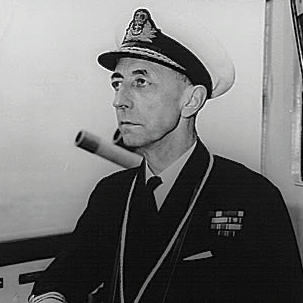
Frank TwissAdmiral Sir Frank Twiss KCB KCVO DSC joined the Royal Navy as a cadet in 1924. During World War II he was Gunnery Officer of HMS Exeter which was badly damaged during the Second Battle of the Java Sea: he was captured and was a Japanese prisoner of war for three years. He was the last captain of HMS Ceylon before she was transferred to the Peruvian Navy in 1960. He was then appointed Naval Secretary to the First Lord of the Admiralty. Lord Carrington (who had been First Lord at the time) later said: “The Naval Secretary was an officer destined to get to the very top ….. to look after promotion to Captain and Flag rank in the Royal Navy and ….. and to look after a civilian First Lord, almost invariably ignorant of naval tradition. ….. For two years Admiral Twiss—quick witted, nimble and tireless—prevented this ex-First Lord from making too much of a fool of himself. ….. He did indeed rise to the top of the Royal Navy, despite an occasion which I remember when cruising with him in HMS Tiger. Anxious to show off the skill of his ship’s gunnery in front of an old First Lord, he made the unpardonable error of shooting down a very expensive target aircraft, to the cheers of the ship’s company but to a stinging rebuke from their Lordships of the Admiralty. I am glad to say that he responded that, since for 30 years he had been trying to hit a target and failed, he could not quite understand the attitude of their Lordships.” He was appointed Flag Officer Flotillas for the Home Fleet in 1962. He went on to be Commander-in-Chief, Far East Fleet in 1965 and Second Sea Lord and Chief of Naval Personnel in 1967. In that capacity he presided over the abolition of the naval rum ration. He retired in 1970. In retirement he served as Gentleman Usher of the Black Rod from 1970 to 1978 responsible for maintaining the buildings, services, and security of the Palace of Westminster. He was also a member of Commonwealth War Graves Commission from 1970 to 1979. Admiral and Lady Twiss lived at East Marsh Farm on Lower Road in Bratton. For several years he was President of the Bratton Branch of the Royal British Legion. He died on 27th January 1994 and he and his wife are buried in St James’ Churchyard. [Return] |
Bratton History Association.
The Bratton History Association aims to provide all those curious about local history with an opportunity to meet, exchange ideas,
and discover more about the history of Bratton and Wiltshire. Activities include monthly meetings, talks by professional historians,
visits to places of interest to historians, and our own local history project.
Copyright Bratton History Association 2015-2026
Bratton History Association Privacy Statement
Copyright Bratton History Association 2015-2026
Bratton History Association Privacy Statement
Web Design by Blue Engine Web Development © 2008-2026